How Guidehealth is Redefining Care Navigation

“It’s not AI or a human. They work together.”
Today’s healthcare rarely fails because clinicians lack data or skill. Systemic breakdowns occur because clinical insights do not reliably translate into action outside the exam room, where the majority of care breakdowns occur. When patients are forced to coordinate their own care across complex systems, they frequently fall through the cracks. According to Dr. Sanjay Doddamani, the CEO of Guidehealth, “falling through the cracks” can mean uncontrolled blood pressure, missed medications, and other gaps in care that accumulate into avoidable deterioration and hospitalizations.
Joining forces to establish evidence-based standards
 To help address these systemic vulnerabilities, Guidehealth, and others across the ecosystem, joined DiMe’s Scaling Trusted, High Impact AI Care Navigation project. This pre-competitive effort set out to ensure that emerging artificial intelligence tools remain patient-centered, trustworthy, and grounded in clinical evidence. By establishing these rigorous guidelines, the project will help health systems deploy scalable models that extend the capabilities of existing care teams.
Operating a closed-loop clinical architecture
The Guidehealth platform functions as a closed-loop system where risk identification directly triggers clinical action. The architecture utilizes three integrated components to manage patient health between appointments.
Brain: Predictive Intelligence
The first layer consists of predictive intelligence, which aggregates claims, electronic health records, pharmacy logs, and event data to maintain a continuously updated patient profile. This data targets patients with modifiable risk to identify where early intervention would have an impact and to align care plans effectively.
Voice: Conversational AI (RoseConnect)
The second layer utilizes an artificial intelligence voice agent named RoseConnect. The agent initiates real-time voice and text outreach during critical moments, such as a recent hospital discharge or missed medication refill. As Doddamani described, “It’s not AI or a human. They work together.” AI can scale outreach and identify needs, but humans ensure that care is actually delivered. “We’ve learned a lot now about this dance between human and non-human, where we’re getting it right fairly often.” He added that the model remains “fairly low abrasion” due to its structured approach.
Touch: Human Healthguides
The final layer introduces human health guides who intervene when clinical complexity, empathy, or administrative barriers require human judgment. This integration ensures that predictive models lead to active execution rather than unutilized dashboards. Explaining the additional role of RoseConnect in support to the clinical staff, Doddamani noted, “Rose, our AI voice agent, is also on the call with the nurse [and patient] — documenting, ambient listening and scribing, doing all the follow-ups in the call, building out the care plan based on discussions.”
None of these components work alone.
Shifting the coordination burden away from the patient
Consider a patient with rising chronic risk who has not seen their primary care physician in over a year. Traditional outreach methods often contact patients during business hours when they are working which frequently fails to schedule necessary appointments. Guidehealth modifies this experience by intervening immediately after a missed prescription refill or a recent urgent care visit. The engagement is contextual and designed to result in a scheduled appointment or completed screening. Human Healthguides then resolve logistical barriers such as transportation and referral, coordination, documenting everything back into the care team’s workflow.
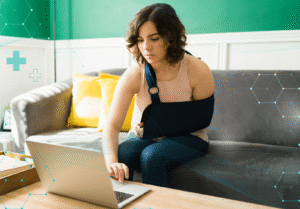 From the patient’s perspective, the experience shifts. Instead of receiving another reminder, they encounter a system that knows what is happening and what needs to be done. The difference is profound: the patient is no longer responsible for figuring out what to do next. Instead of navigating care alone, they experience a system that is aware, responsive, and coordinated.
Designing for trust and transparency
Deploying automated tools requires intentional design choices to build trust among skeptical patient populations. As Doddamani noted, some patients initially question whether AI outreach is legitimate. Guidehealth addresses this by validating context (“you were recently in the ER”), signaling intent, and quickly connecting patients to human support when needed.
Guidehealth establishes legitimacy by validating specific clinical events, such as referencing a recent emergency room visit during patient outreach. The platform signals clear patient communication prior to engagement, maintains access to human care staff, and ensures full documentation transparency back to the patient’s care team.
Trust develops systematically as patients observe the platform resolving care barriers and facilitating access.
Quantifying clinical outcomes and gap closures
The efficacy of Guidehealth’s model is reflected in performance data from large academic health system partnerships.
Within one system, Guidehealth increased annual wellness visit completion rates from 55% to 76% over a two-year period. Another clinical program achieved a 32% reduction in 90-day readmissions and fewer overall rates of avoidable admissions.
Organizations track these outcomes by measuring the time from risk identification to clinical action, outreach conversion rates, and the reduction of administrative tasks for providers. As Doddamani described, the goal is to secure more “happy days at home” and fewer unnecessary hospitalizations.
Establishing care navigation as clinical infrastructure
 This model positions care navigation as core healthcare infrastructure.
This shift is driven by the execution demands of value-based care, clinical workforce constraints, and the capacity of AI to facilitate more continuous patient outreach. By integrating predictive intelligence, conversational AI, and human support into a single operating loop, GuideHealth shifts healthcare delivery from informing patients to helping them obtain comprehensive care.
Scale of this model allows patients to be more engaged and active in their care and health systems to operate more proactively, reducing avoidable hospitalizations and optimizing resource allocation. As Doddamani described, the objective is to secure more stable days at home for patients. This example serves as a real-world reference point within DiMe’s Scaling Trusted, High Impact AI Care Navigation project, illustrating how scalable, evidence-based artificial intelligence applications can be deployed systematically to standardize care delivery across the industry.
Guidehealth is a project partner in DiMe’s Scaling Trusted, High Impact AI Care Navigation initiative. Learn more about the project or review DiMe’s portfolio of actionable clinical resources.