One year ago, the U.S. Health Tech Ecosystem set out to transform how patients access, use, and benefit from their health data. The ambition to align government, healthcare, technology companies, providers, payers, and patient advocates around a shared vision for a more connected, patient-centered healthcare system was laudable.
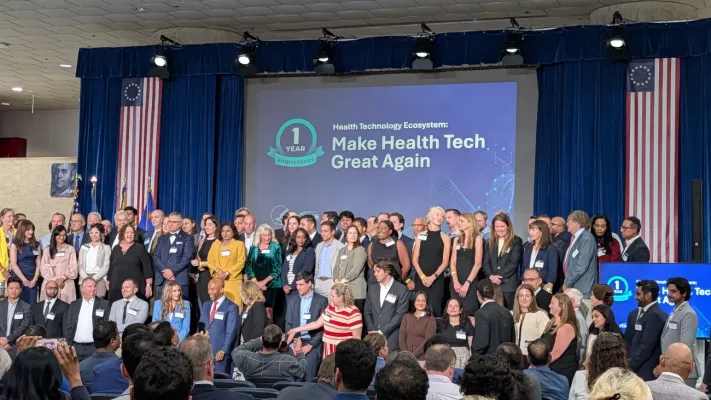
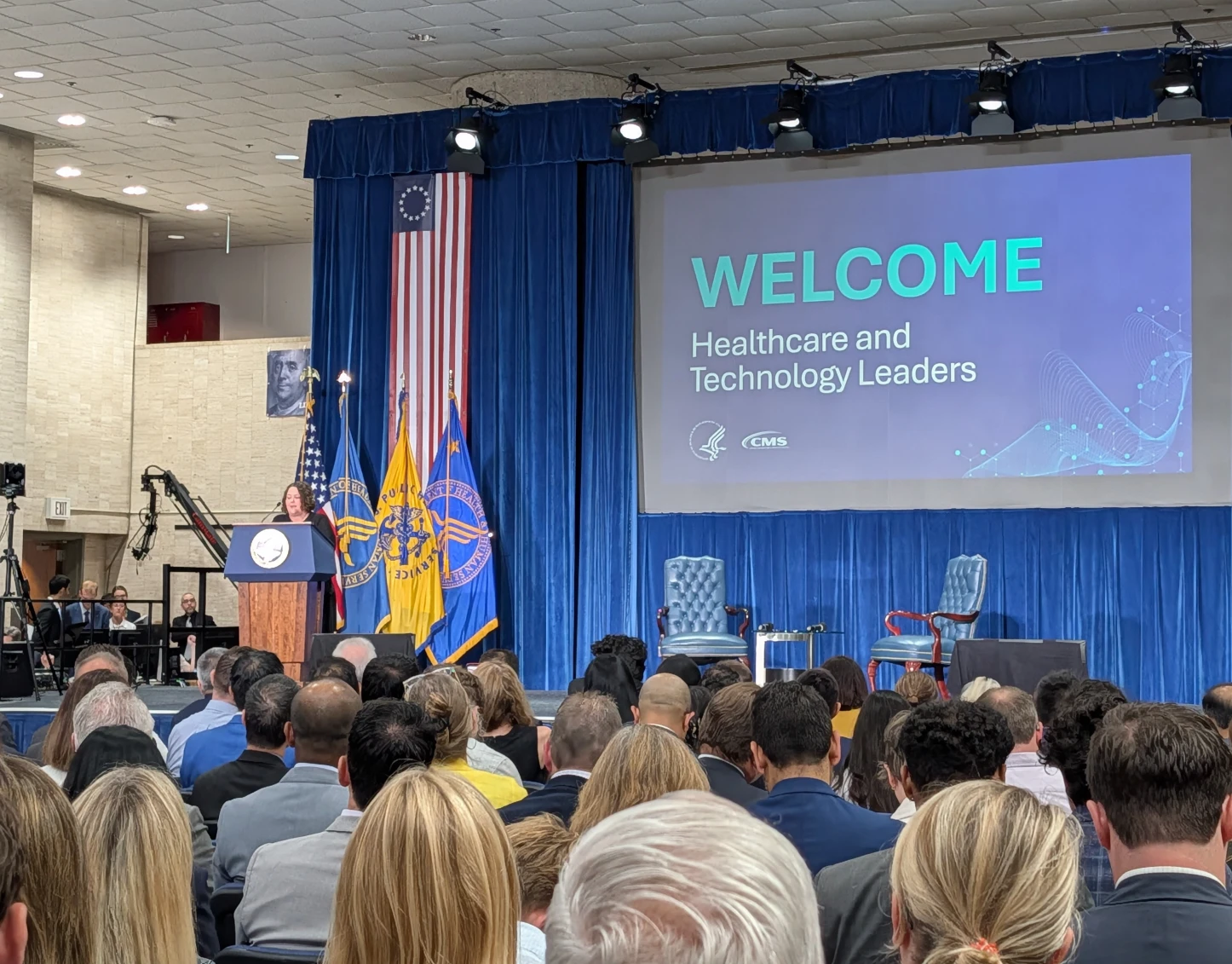
Yesterday, leaders from across that community came together to celebrate the first anniversary of the Health Tech Ecosystem. The progress of the past year demonstrates what is possible when government establishes a clear direction and the broader healthcare community works together to deliver it. Just as importantly, the celebration made clear that the Health Tech Ecosystem is entering its next phase. Year one focused on building the infrastructure. Year two is focused on implementation and scaling.
A Year of Measurable Progress
When the Health Tech Ecosystem launched, many questioned whether an initiative built on voluntary commitments from hundreds of organizations could produce meaningful change. Healthcare has seen ambitious initiatives come and go before.
Throughout the day, we were reminded of Margaret Mead’s famous quote, “Never doubt that a small group of thoughtful, committed citizens can change the world; indeed, it is the only thing that ever has.” One year later, the Health Tech Ecosystem demonstrates exactly what is possible when that commitment is matched with clear goals, practical implementation, and sustained collaboration.
The numbers shared during the celebration tell that story. More than 800 organizations have now pledged to the movement or joined as friends of the ecosystem. Twelve months ago, only around 5% of patients could access their health information through an app of their choice. Today, that figure has reached 60%, with CMS projecting it will exceed 80% by October. CMS has also transformed its own technical capabilities, growing from just nine engineers working on these efforts a year ago to more than seventy today.
The progress achieved in just twelve months demonstrates that healthcare can move quickly when incentives are aligned, expectations are clear, and government and industry work toward shared goals. For years, digital health has been limited less by technology than by fragmented implementation. The Health Tech Ecosystem is helping to change that.
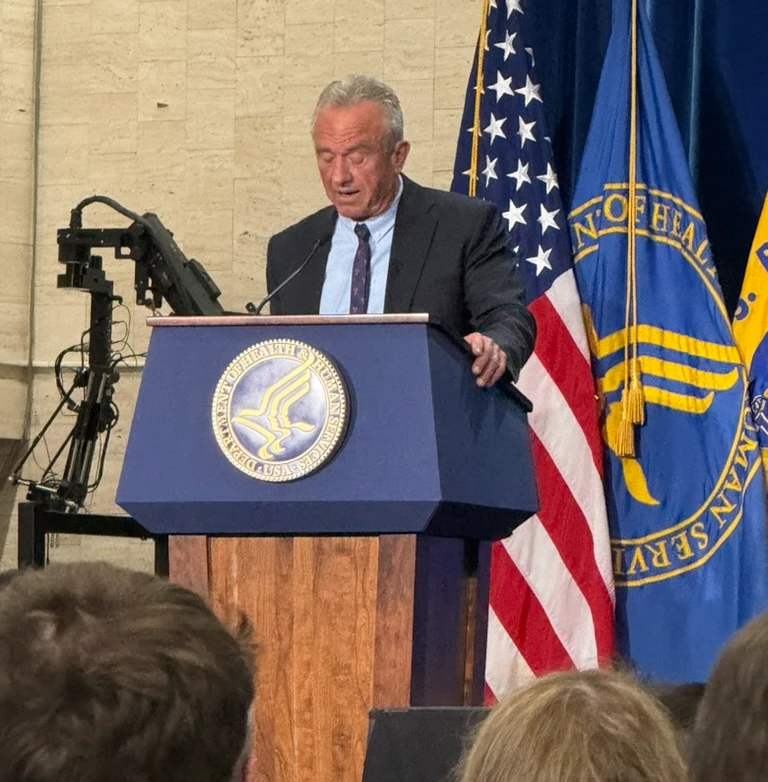
HHS Secretary Robert F. Kennedy Jr. summarized the approach succinctly, “when government sets clear goals, industry responds.” He described the result as “a health tech ecosystem that puts patients first” and challenged the community to “build a healthcare system worthy of the American people.” Chris Klomp, Director of Medicare and Deputy Administrator of CMS, reinforced that vision, observing that technology and data should ultimately be used to alleviate human suffering.
Trust is the Foundation of Adoption
At the Digital Medicine Society (DiMe), we have always believed that multi-stakeholder collaboration is the most effective way to solve healthcare’s most complex challenges. No single organization can modernize healthcare alone. The Health Tech Ecosystem reflects that same philosophy, bringing together government, technology developers, providers, payers, and patient organizations behind a shared commitment to improving care through trusted digital technology.
We are proud to contribute to that effort through the DiMe Seal.
When CMS established the Medicare App Library, it chose to have applications evaluated by independent, expert third parties against rigorous standards for evidence, privacy and security, and usability. The approach underscores that patient choice depends on patient confidence.
The DiMe Seal now serves as one of two recognized pathways for patient-facing applications seeking inclusion in the Medicare App Library across priority areas including Conversational AI, Kill the Clipboard, and Diabetes & Weight Loss Management. Every organization that earns the DiMe Seal demonstrates a commitment to building products that patients, clinicians, and health systems can trust because they have been independently assessed against transparent, evidence-based benchmarks.
During the celebration, Stephanie Carlton, CMS Deputy Administrator and Chief Clinical AI Officer, reported that while only 30% of Americans currently trust AI with their health data, 67% believe AI offers value after using AI-enabled healthcare tools. Experience builds confidence, but confidence must first be earned. Independent evaluation has an essential role to play in helping patients, clinicians, and health systems adopt digital health with confidence.
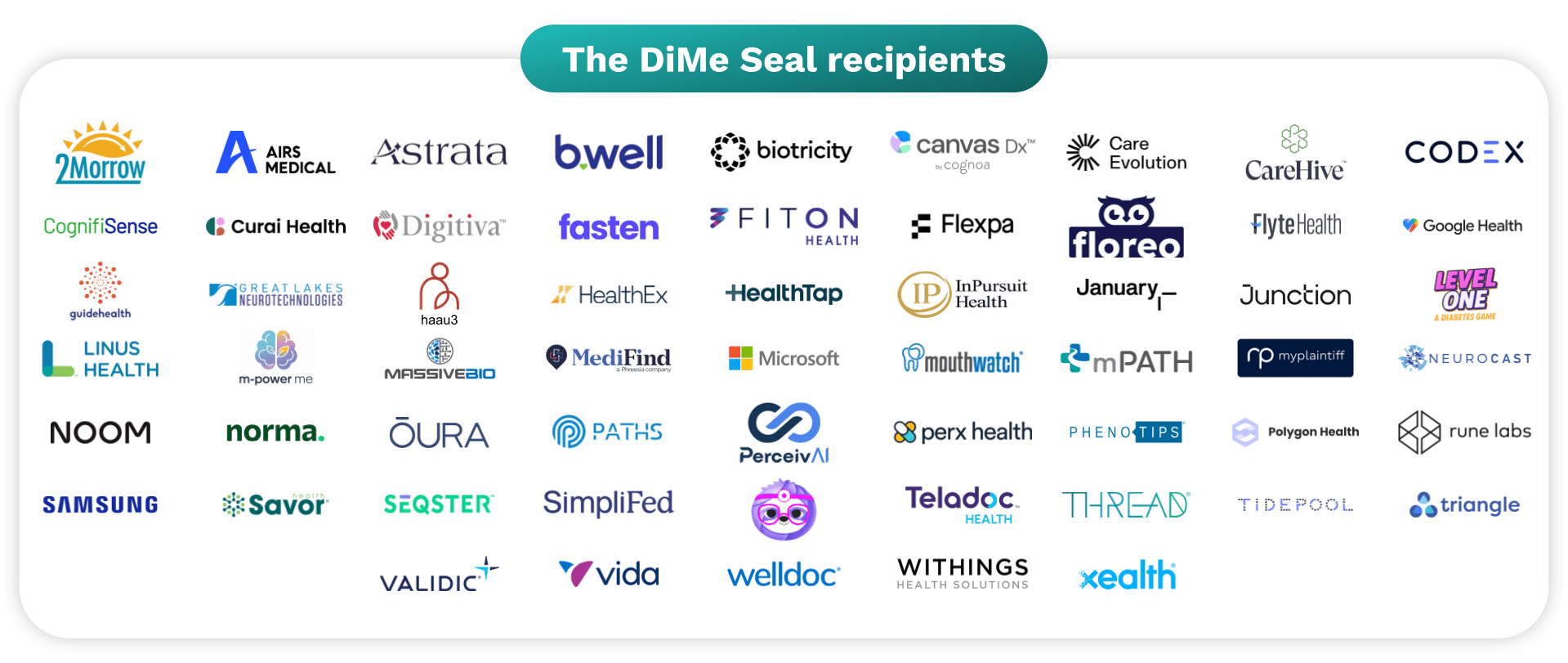
The DiMe Seal exists to help build that confidence. We are proud of the organizations that have earned it for their product and of the role they are playing alongside the more than 800 organizations contributing to the Health Tech Ecosystem.
A Whole-of-Government Approach
The creation of the CMS Office of Health Technology and Products (OHTP) is one of the most significant developments during the past year, but has received far less attention than it deserves. By bringing together expertise across technology, product development, implementation, and policy, OHTP reflects a recognition that improving healthcare requires more than new regulations or new technology. It requires an organization that understands what it takes to build products to be effective at implementing pragmatic policy at scale.
Amy Gleason, Deputy Administrator and Chief Product Officer of OHTP, reinforced that message during the celebration, observing that healthcare’s hardest challenges cut across every program within HHS. Increasingly, the teams responsible for solving those challenges do as well. Throughout the day, leaders from HHS, CMS, FDA, and ONC described complementary efforts that align policy, regulation, technology, and implementation in support of a connected digital health ecosystem.
FDA’s participation illustrates this particularly well. Michelle Tarver, Director of FDA’s Center for Devices and Radiological Health, described how the TEMPO pilot complements the ACCESS Model by creating opportunities for lower-risk digital health technologies to reach Medicare beneficiaries more quickly while generating the evidence needed to inform longer-term market access decisions. She also underscored FDA’s continuing responsibility to ensure that clinical AI and digital health technologies are safe and effective, noting that evaluating these technologies is the bread and butter of FDA.
Tom Keane, National Coordinator for Health Information Technology, reflected on another important milestone, observing that “we’ve placed patients at the center and made their data work for them.” The significance of that statement extends beyond interoperability. For decades, patients have effectively served as the integration layer for healthcare, carrying information between disconnected providers and systems because the technology could not. The Health Tech Ecosystem is beginning to remove that burden by making patients’ data available where and when they need it.
Year Two Begins
The announcements made during the celebration reflected a clear shift in priorities driven by tangible progress. The first year of the Health Tech Ecosystem focused on building the infrastructure needed to support patient-directed data sharing. The second year is focused on ensuring that infrastructure is used at scale.
Eight health systems committed during the event to begin supporting referrals into ACCESS beginning September 15. Eight new pledge categories were announced, expanding the ecosystem into areas including advanced scheduling, clinical trial matching, pharmacy systems, pharmacist workflows, and additional patient-facing services. These commitments move the conversation beyond connectivity toward integrating digital health into routine care.
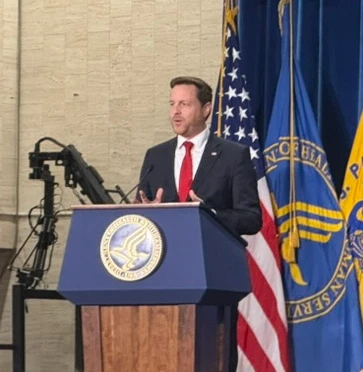
Chris Klomp summarized the challenge well. Patients can now bring their health information to their clinicians. The healthcare system must now be prepared to receive it. Success depends not only on patients having access to their data, but on providers, health systems, payers, and technology developers incorporating that information into everyday clinical care.
Demonstrating that digital health can improve care has never been the finish line. The opportunity has always been to help healthcare adopt trusted technologies that impact outcomes through practical frameworks, independent evaluation, and collaboration across the ecosystem. That shift from infrastructure to implementation mirrors much of DiMe’s own work.
Chris Klomp also offered perhaps the clearest definition of success. The systems being built today will have succeeded when no one notices them because they simply work. Secure, trusted digital health should become part of the standard of care rather than something patients or clinicians have to think about.
We are proud to contribute to year two of the Health Tech Ecosystem through the DiMe Seal, our evidence frameworks, and the multi-stakeholder collaborations that help organizations implement digital health solutions that work for every person our healthcare industry exists to care for.